Mechanical customization on an electric forklift comes down to three systems: the mast, the body envelope and the carriage. Each has a real engineering limit, and the limit is what separates a customization request that a factory can accept from one it has to refuse. This article works through the mast stages and free lift, the body dimensions of the standard trucks, and the attachment interfaces — with the numbers a buyer needs to check before committing.
The mast: stages, height and free lift
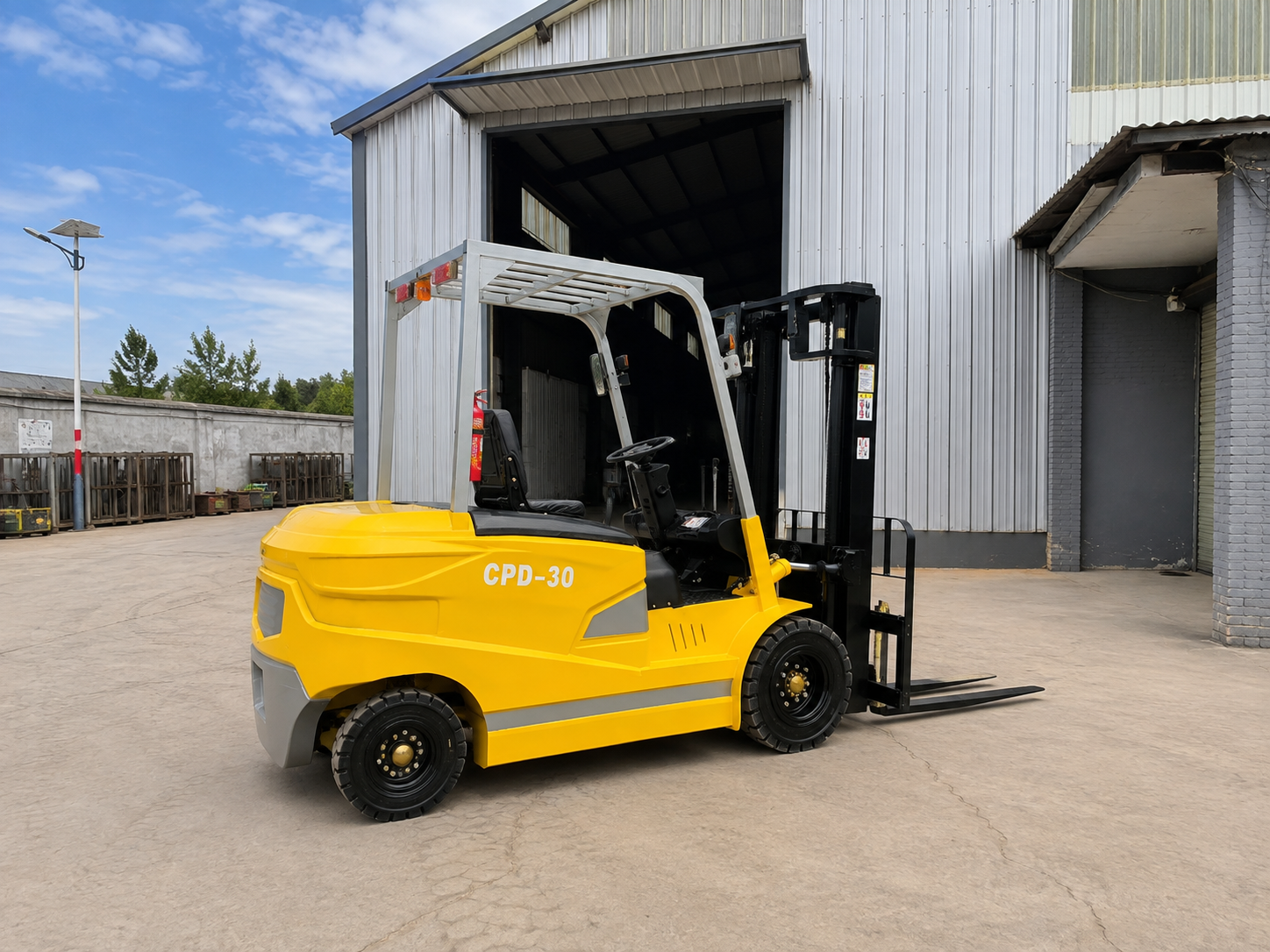
A standard mast has one lift stage and is the simplest and most rigid structure. Gangchi's standard configuration across the line is a 3-metre lifting height, which covers pallet racking up to roughly 2.4 metres of usable beam height once the fork carriage and the load are added. Two-stage and three-stage masts are available when the racking goes higher.
Three numbers describe any mast, and they must be quoted together:
- Lifting height — how high the forks reach. This is the number buyers ask for and the least interesting on its own.
- Lowered height — the height of the mast with the forks at the floor. This is the number that decides whether the truck enters a container, a mezzanine or a low doorway.
- Free lift — how far the forks rise before the mast stages themselves extend. This is the number that decides whether a load can be lifted under a door header, or double-stacked inside a trailer.
The trade-off is structural. Adding stages reaches higher on the same truck base, but it adds weight and complexity and reduces the residual capacity at full height. A truck rated at its maximum tonnage on the floor is not rated at the same figure with the mast fully extended — which is exactly why the capacity must be asked for at your lifting height, not at the headline figure.
The body envelope: what actually changes between models
Body dimensions are the customization item buyers most often assume is free, and it is one of the most constrained. The standard models give a clear picture of how the envelope scales with capacity:
| Item | 1 t three-wheel | 1.5 t three-wheel | 2 t three-wheel |
|---|---|---|---|
| Length without forks | 1,800 mm | 2,200 mm | 2,350 mm |
| Length with forks | 2,870 mm | 3,270 mm | 3,420 mm |
| Width | 1,030 mm | 1,200 mm | 1,200 mm |
| Height | 1,900 mm | 2,120 mm | 2,050 mm |
| Vehicle weight | 1,800 kg | 2,500 kg | 3,200 kg |
| Drive motor | 3,000 W | 4,000 W | 5,000 W |
| Turning radius | 90° on-site turning | 90° zero turning | 90° on-site turning |
| Gradeability | Ask per configuration | Ask per configuration | 20° |
Three things follow from this table. First, width grows once, then stops — the 1 t body is narrower, and the 1.5 t and 2 t share a 1,200 mm width. Second, length grows continuously with capacity, and the fork accounts for roughly 1,070 mm of it on every model. Third, weight grows faster than capacity, from 1,800 kg to 3,200 kg across a 1 t to 2 t step — which matters for floor loading and for how many units fit in a container.
This is why "can you make it 50 mm narrower" is a harder question than it looks. Body width interacts with axle track, stability and the counterweight. What a factory can usually do is adjust dimensions within the platform and confirm the limits per configuration, and it will ask for the aisle measurement that drives the request.
The carriage and attachments
The carriage is the interface between the truck and whatever it has to pick up, and it is the most modular part of the machine. The standard fork is a 1,070 mm heavy-duty forged fork, and it is a customization item rather than a fixed part.
Available on the Gangchi range:
- Side shifter — lets the operator move the load sideways without repositioning the truck. The single most useful attachment in a narrow aisle, because it converts a three-point manoeuvre into a one-point manoeuvre.
- Load backrest — keeps the load against the carriage and protects the mast from a shifting pallet.
- Fork length options — longer forks reach deeper into a load, but they move the load centre outward, which reduces rated capacity unless the counterweight is raised.
- Battery solutions — a carriage-side concern only in that battery weight and allocation affect the truck's balance point.
The engineering rule for the carriage block is simple: every attachment adds mass in front of the drive axle. The rated capacity printed for a bare truck is not the rated capacity with a side shifter and a load backrest fitted. Ask for the derated figure, not the brochure figure.
Chassis choice is a mechanical customization too
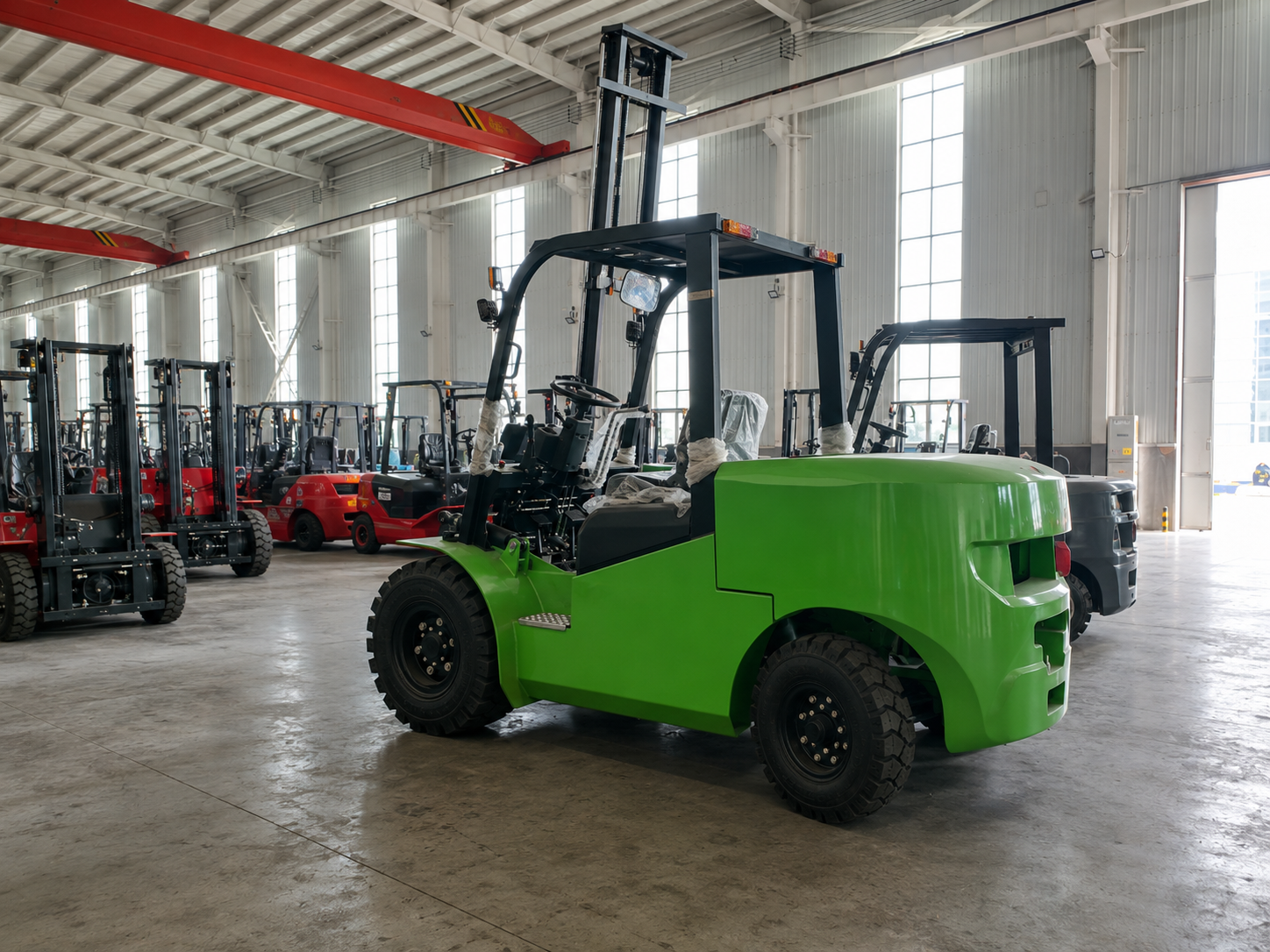
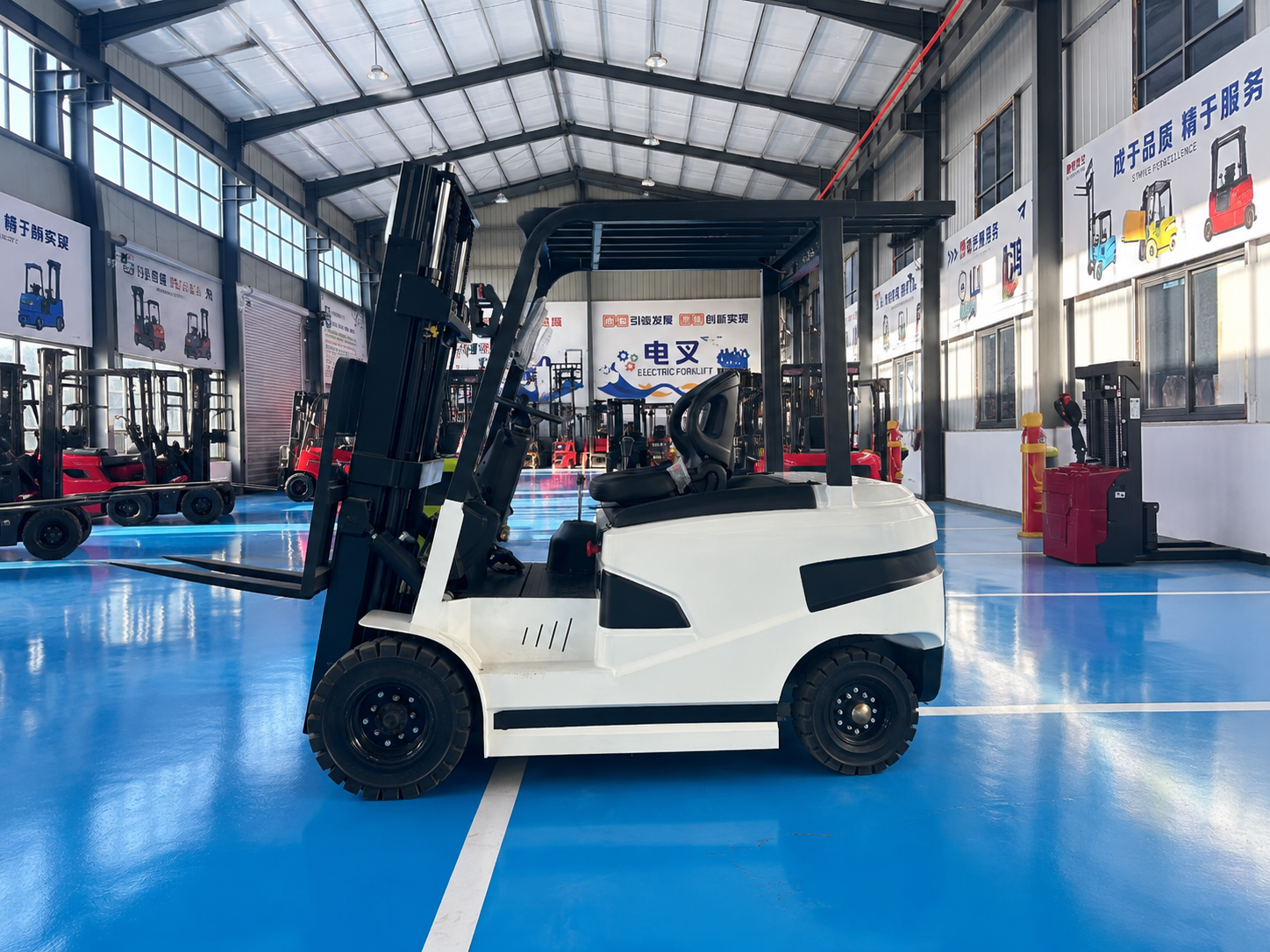
Three-wheel and four-wheel are often treated as separate products, but on a customization order they are two answers to the same mechanical constraint. A three-wheel chassis turns tighter and is the reason the 1 t body can be 1,030 mm wide; a four-wheel chassis carries a heavier counterweight and is more stable on uneven ground, at the cost of a larger turning circle.
Cast-iron counterweight versions exist across the range for the cases where the extra mass genuinely pays — dense loads, high lifting, and surfaces that demand stability rather than speed. The choice belongs in the duty block of the specification, because it changes the weight, the floor loading and the transport cost simultaneously.
Setting the engineering limits before you ask
Mechanical customization works best when the buyer arrives with constraints rather than preferences. Three measurements do most of the work:
- The tightest aisle the truck will operate in, measured at the narrowest point including any racking leg, column or door frame.
- The highest beam the truck has to reach, plus the pallet and carriage height above it.
- The lowest opening the truck has to pass through with a load raised — the container door, the mezzanine header, the dock leveller edge.
With those three numbers, the chassis, the body envelope and the mast are largely determined, and the remaining customization is genuinely optional. Without them, every option is a guess, and a guess made on the factory side is the one you will live with.
Frequently asked questions
Can the lifting height be customized beyond 3 metres?
Yes. Two-stage and three-stage masts are available, and lifting height is adjustable to the rack layout. Confirm lifting height, lowered height and free lift as a set.
Why is a narrower body difficult?
Body width is tied to axle track, stability and the counterweight, so it cannot be reduced freely. Tell the factory the aisle width and let it confirm what the platform allows.
Does a side shifter reduce capacity?
Any attachment adds mass in front of the drive axle, so the rated capacity with the attachment fitted can be lower than the bare-truck figure. Ask for the derated rating.
Is a 1,070 mm fork standard on every model?
It is the standard heavy-duty forged fork across the range and it is customizable. Longer forks move the load centre outward, so check the effect on rated capacity.
How much heavier is a cast-iron counterweight truck?
Vehicle weight rises with capacity across the range, and the cast-iron variants sit at the heavier end. Confirm the figure for the exact configuration, since it drives floor loading and container quantity.
Send your aisle width, top beam height and lowest opening to the Gangchi team with your rated load, and ask for a configuration proposal that names the mast stages, the body dimensions and the attachments — with the derated capacity stated.