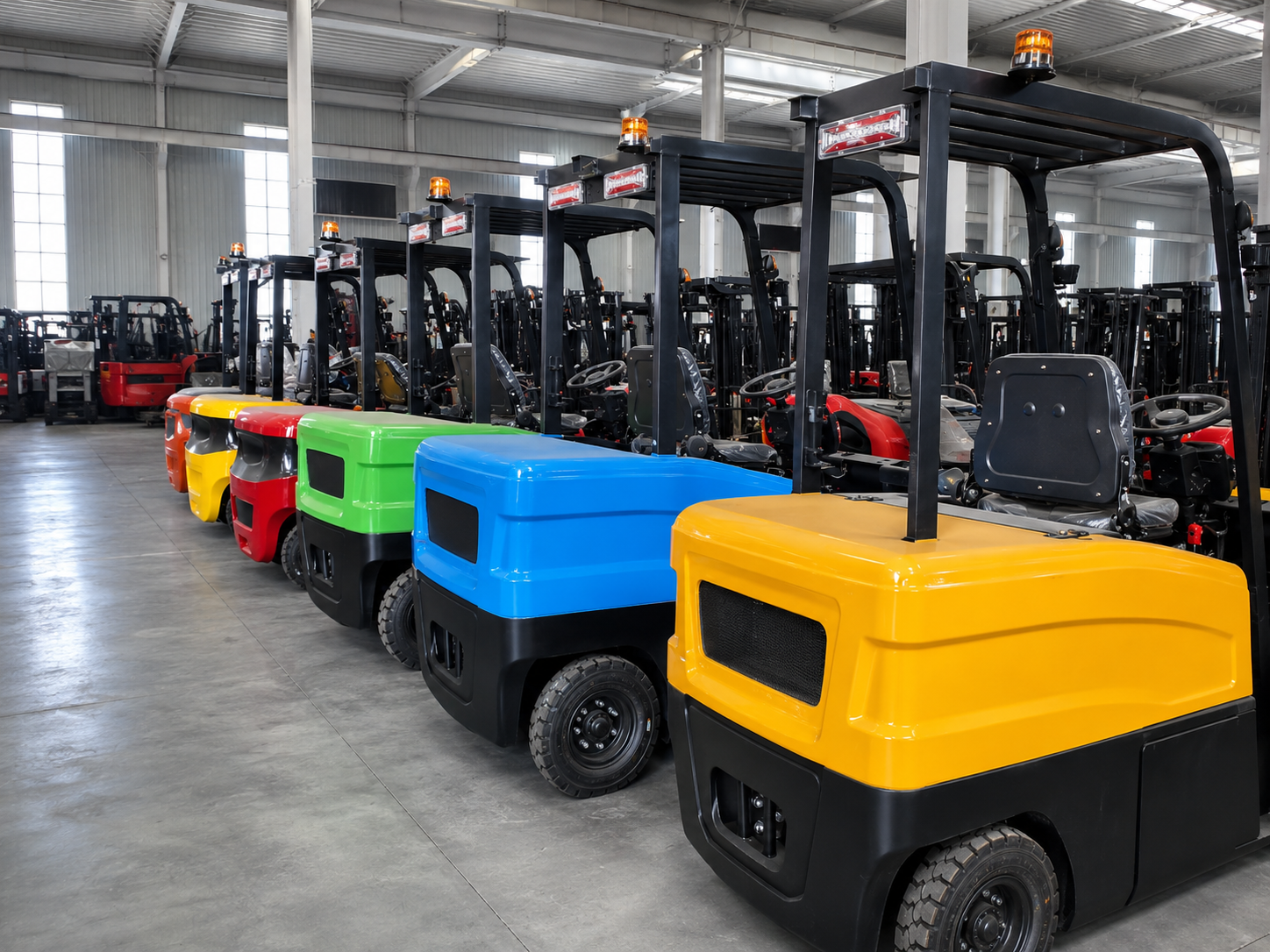
For a distributor selling under their own brand, the customization that customers actually see is the identity block: the colour, the nameplate, the manual and the packaging. These items are cheap to change and expensive to get wrong, because a mistake is repeated across an entire batch. This article covers how a custom paint finish is specified, what belongs on a nameplate and a warning label, which documents should travel with a customized machine, and the handover checks that close a private-label programme.
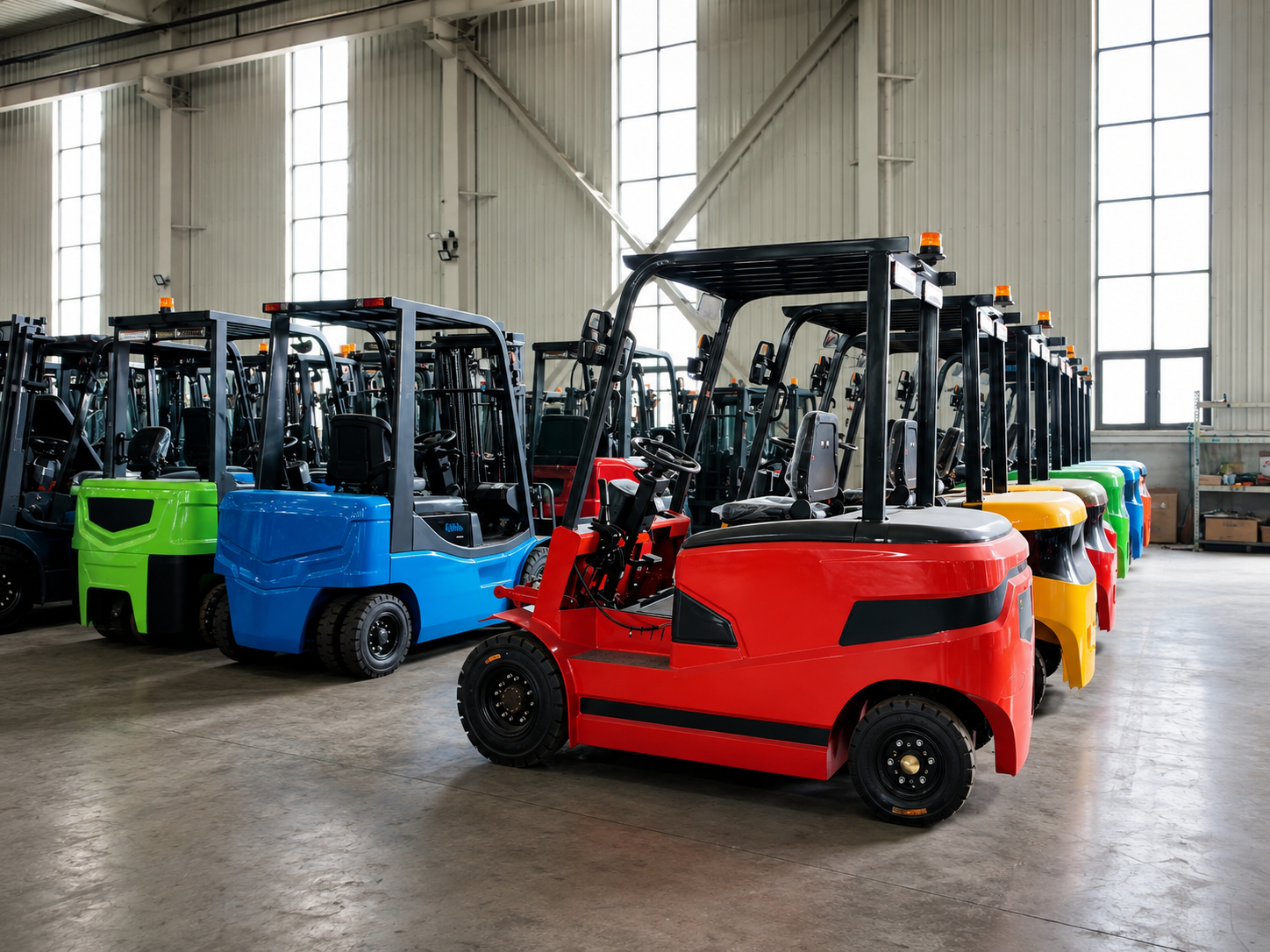
Paint and colour: specify a reference, not a word
The first rule of custom colour is that colour names are useless. "Blue" is not a specification; a reference is. Every colour request should arrive with a reference that a paint shop can match — a RAL number, a Pantone reference for the graphic elements, or a physical sample of your existing fleet.
Three consequences follow, and all three are worth agreeing in writing:
- Batch minimum. A non-standard colour means the paint is mixed for your order. Small orders may carry a minimum quantity or an additional setup, which is normal and should be quoted rather than discovered.
- Cross-panel variation. A painted body combines several panels and the mast, and paint behaves slightly differently on each surface and on cast versus sheet metal. Two units of the same colour can read slightly differently under different light, so approve a physical sample under daylight and under warehouse lighting rather than a screen image.
- Touch-up availability. A colour you cannot match later is a colour that will look tired in two years. Ask what touch-up paint is supplied and whether it can be re-ordered.
The reliable sequence is: send the reference, receive a physical sample, approve it in writing, and keep that approved sample as the standard against which the batch is checked.
Nameplate, decals and warning labels
The identity block is not only decorative. A forklift carries information plates that have a safety and compliance role, and the relationship between your brand and the manufacturer's identity on those plates has to be decided before printing.
| Item | What goes on it | Decide before printing |
|---|---|---|
| Nameplate | Brand owner name, model, rated capacity, serial number | Whose legal entity appears, and in what order |
| Capacity plate | Rated load at load centre, and at height if derated | The derated figure for the fitted attachment |
| Warning labels | Operator and maintenance warnings | The language set required in your market |
| Decals and graphics | Brand marks, model markings, contact details | Artwork file format and colour reference |
| Serial and identification | Unique machine identity | Numbering series and where the record lives |
Two of these deserve more attention than they usually get. The capacity plate must state the derated rating when an attachment is fitted, not the bare-truck figure — a plate that overstates capacity is a safety document that is wrong, not a printing error. And warning labels must be in the language of the operator, which is a market decision, not a translation convenience.
Warning-label language is also worth checking against the operator population rather than the buyer's language. A machine sold into a market where the operators read a different language than the purchasing office needs labels in the operators' language.
Documents that should travel with a customized machine
A customized machine is not a catalogue product, so its documentation cannot be a catalogue manual. These are the documents worth agreeing on at the order stage, because generating them after the batch has shipped is where programmes get stuck:
- Operation and maintenance manual in the required language set, covering the fitted configuration rather than the base model.
- Wiring and hydraulic diagrams for the actual build, including the attachment circuit if one is fitted.
- Parts list referenced to the machine's configuration, so a replacement hose or contactor can be ordered years later without a machine survey.
- Capacity and configuration record matching the nameplate, kept by both parties.
- Declaration or conformity documents required for the destination market, where applicable.
The parts list is the document buyers most often skip and most often regret. A customized truck contains at least one part that the standard parts catalogue does not show, and the only cheap moment to record it is while the specification is still open.
Packaging is part of the identity
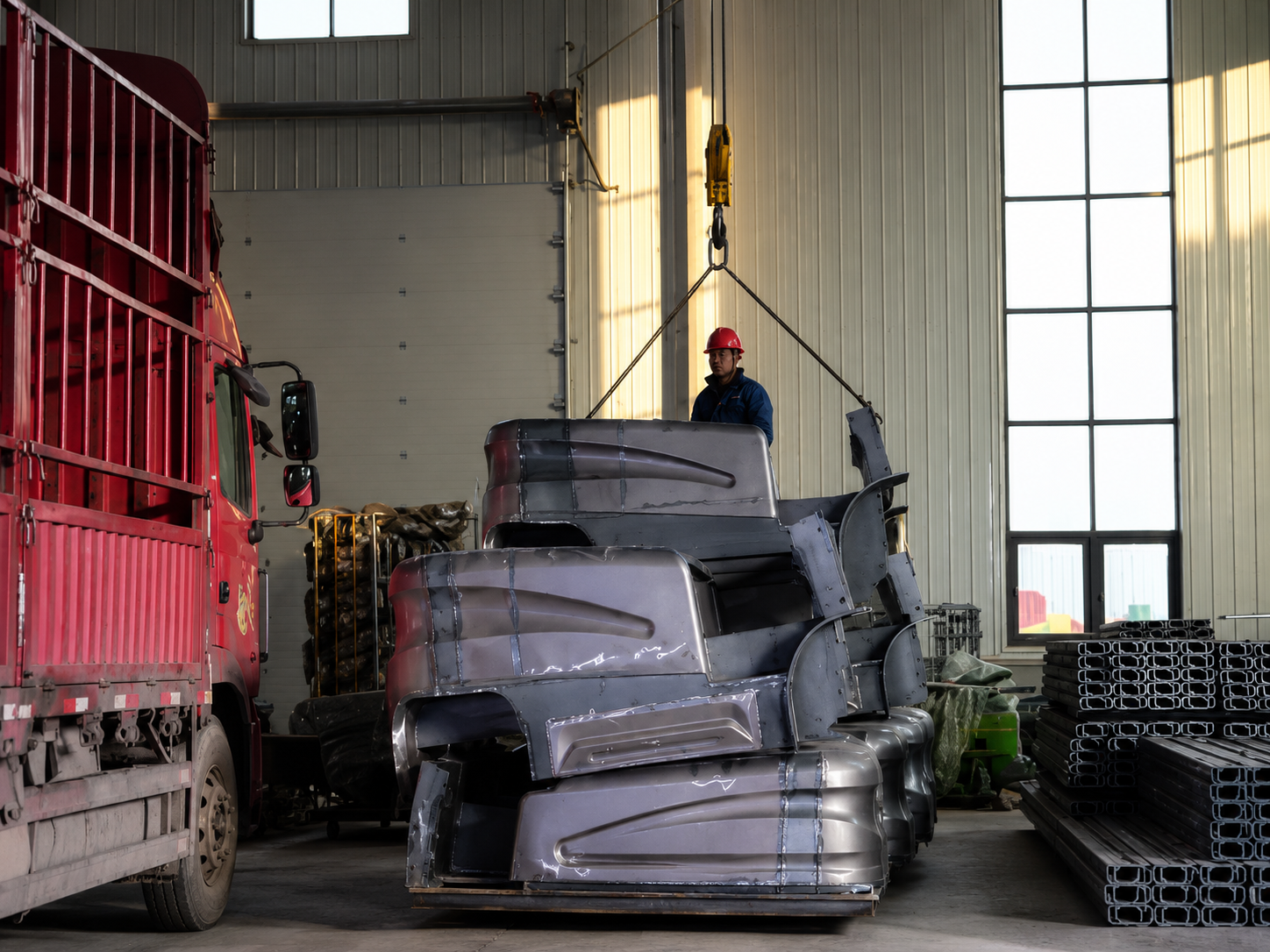
Packaging for forklifts is a protection problem first and a marketing surface second, but on a private-label order it is both. A machine that arrives with the manufacturer's branding on the crate, the protective film and the documentation undermines the brand it carries on the nameplate.
Confirm at the order stage:
- Whether the crate, pallet and stretch film carry your branding or neutral marking.
- How the machine is protected — the wrapping, the mast bracing and the fork protection that survive a container crossing.
- Whether the manual and documentation are packed inside the crate or with the machine, and in which container.
- Loading plan and quantity per container, which for a heavy customized unit may be lower than for the standard model.
The last point connects back to the engineering: a cast-iron counterweight configuration weighs more, which changes how many units fit a container and therefore the per-unit freight. That is a customization decision with a logistics consequence, and it belongs in the quote.
Closing a private-label programme: the handover check
The final stage is short and worth doing properly. Before the batch ships, verify against the frozen specification:
- Colour matches the approved physical sample, checked in daylight.
- Nameplate content, capacity figure and serial numbering are correct and complete.
- Manual and diagrams match the fitted configuration and the required languages.
- Parts list references the correct build.
- Decals and warning labels are present, correctly placed and legible.
- Packaging and marking match the brand agreement.
Each item is cheap to correct in the factory and expensive to correct after arrival. That asymmetry — not the aesthetic — is the reason this check exists.
Frequently asked questions
How should I specify a custom colour?
With a reference, not a name — a RAL number, a Pantone reference, or a physical sample. Then approve a physical sample in writing and keep it as the standard for the batch.
Can my brand appear on the machine instead of the manufacturer's?
Yes, that is the point of a private-label programme. Agree whose legal entity appears on the nameplate and in what order before the plates are printed.
Which documents come with a customized forklift?
Operation and maintenance manual, wiring and hydraulic diagrams for the actual build, a configuration-referenced parts list, the capacity record and any market conformity documents. Confirm the set at the order stage.
Should warning labels be in my language or the operator's?
The operator's. Labels exist to be read by the person on the machine, so specify the language set by market rather than by purchasing office.
Does a customized unit change how many fit in a container?
It can. A heavier counterweight configuration and additional attachments change both the weight and the dimensions, so confirm the loading plan and the quantity per container in the quote.
If you are planning a private-label or OEM programme, send your colour reference, nameplate content, language set and packaging requirement to the Gangchi inquiry team and ask for the identity block to be confirmed in writing alongside the machine specification.