A forklift customization order fails or succeeds on one document: the specification sheet. A standard model is ordered by model number; a customized model is ordered by a list of options, and every option you leave unwritten will be decided by someone else. This article sets out the five blocks a customization spec has to cover, how the option matrix constrains itself, what the CPD model numbers mean, and the six lines a customization quote must contain before it is worth comparing.
The five blocks of a customization spec sheet
A customization spec sheet is not a wish list. It is five blocks, each of which has to be resolved before the factory can quote:
- Duty block. Rated load, load centre distance, maximum lifting height, and the surface the truck works on. This block decides the chassis, the counterweight and the mast.
- Envelope block. Overall length with and without forks, overall width, lowered height and the tightest aisle or doorway the truck has to pass. This block decides whether the truck fits at all.
- Power block. Battery chemistry, voltage, capacity and the charging window available between shifts. This block decides the motor sizing and the runtime.
- Attachment block. Side shifter, load backrest, fork length and any special attachment. This block decides the carriage and the hydraulic circuit.
- Identity block. Body colour, nameplate content, decal artwork, manual language and packaging. This block decides what the machine looks like when it arrives.
The reason to separate them is that the blocks are not equally flexible. The duty block is usually the least negotiable, because it comes from physics; the identity block is usually the most negotiable, because it comes from a design file. When a buyer asks for a change that is refused, it is almost always a duty block item, and the supplier should be able to say which number in the duty block caused the refusal.
The option matrix: what each change costs you elsewhere
Options on an electric forklift are not independent. Changing one moves at least one other number, and the matrix below is the one worth reading before you send a request:
| Option | What it changes | What it constrains |
|---|---|---|
| Longer fork | Load centre distance moves outward | Rated capacity drops unless the counterweight is raised |
| Higher lifting height | Mast stages increase, e.g. two-stage to three-stage | Lowered height and residual capacity at full height fall |
| Wider body | Stability improves | Minimum aisle width and container loading pattern change |
| Larger battery | Runtime per charge improves | Battery compartment volume and total vehicle weight rise |
| Side shifter | Pallet handling without repositioning the truck | Adds hydraulic circuit, carriage width and cost |
| Non-standard body colour | Fleet identity and photo consistency | Paint batch minimum, lead time and touch-up availability |
| Custom nameplate and manual | Brand ownership on the machine | Setup per batch, and the documents must be frozen before print |
Read the middle column and the third column together. A request that only has entries in the middle column is easy; a request that also fills the third column is a project. The productive way to open a customization discussion is to state the two or three numbers that cannot move — usually the aisle width and the maximum lifting height — and let everything else be proposed around them.
What the CPD model numbers mean
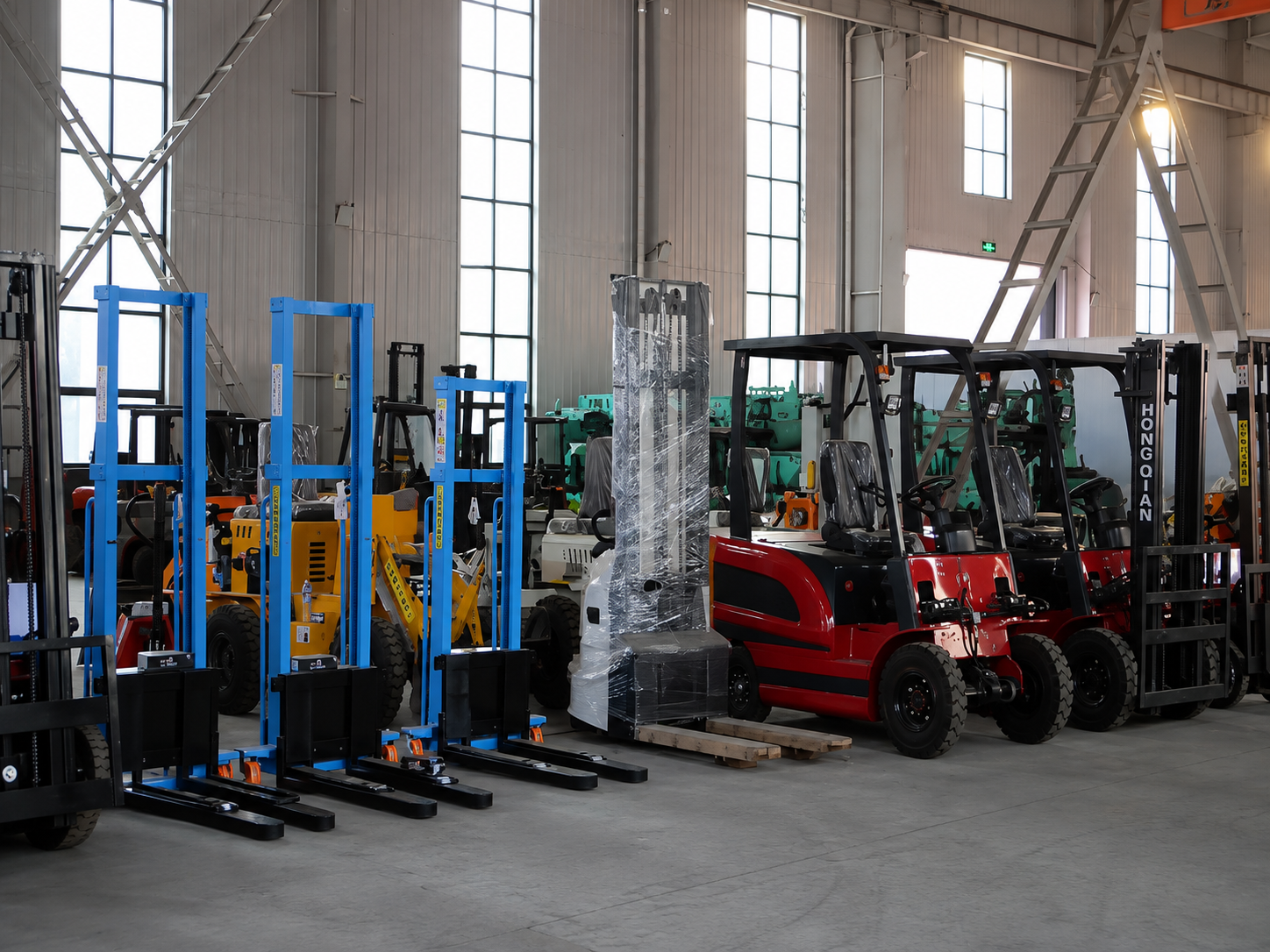
Gangchi builds the CPD series in nine configurations, and the model suffix is the rated capacity in tenths of a tonne:
| Model | Rated capacity | Typical use |
|---|---|---|
| CPD-10 | 1.0 t | Light warehousing, narrow aisles, small pallets |
| CPD-15 | 1.5 t | General warehouse and distribution work |
| CPD-20 | 2.0 t | The most common general-purpose size |
| CPD-25 | 2.5 t | Denser loads and longer pallets |
| CPD-30 | 3.0 t | Heavier manufacturing and logistics duty |
| CPD-35 | 3.5 t | Heavy palletised goods and dense materials |
| CPD-50 | 5.0 t | Industrial handling with cast-iron counterweight |
| CPD-100 | 10.0 t | Heavy industrial and project cargo |
| CPDS-20 | 2.0 t | Three-wheel variant for tight turning |
Two practical notes. First, the capacity range is wider than the nine models suggest, because the customization programme covers production between the standard steps — the 1.5–5 t band is offered as a custom-production range, not only as fixed sizes. Second, the S suffix marks a three-wheel chassis, which is a different answer to a narrow-aisle problem than a four-wheel truck with a smaller body.
The six lines a customization quote must contain
Comparing customization quotes on the total price alone is the most common buying error, because two quotes for "the same" customized truck are rarely for the same machine. Insist on these six lines for each unit:
- Model and capacity at the specified load centre — not just the headline tonnage.
- Mast configuration — stages, lifting height, lowered height and free lift.
- Overall dimensions — length with and without forks, width, height.
- Power specification — battery chemistry and capacity, voltage, charger included or not.
- Non-standard items, itemized — attachment, colour, nameplate, manual language, packaging.
- Validation step — whether a sample or prototype unit precedes the batch, and who signs it off.
A quote missing any of these lines is not comparable; it is a price for an unspecified machine. Asking for the six lines in writing costs nothing and removes most of the argument that follows a first shipment.
Freeze the specification before production
The last stage that matters is not manufacturing, it is the freeze. A customization can absorb changes cheaply while it is still a document, and expensively once the paint is mixed or the mast is cut. Agree on the point at which the specification is frozen, and on what happens to a change request after that point — who approves it, what it costs and how far it moves the delivery date.
For any configuration that departs from the standard build, a single sample or prototype unit is the reliable way to close the gap between a written spec and a finished machine, because it converts every ambiguous line on the sheet into something that can be measured, driven and photographed. The sign-off on that unit is what the batch is then built against.
Frequently asked questions
How detailed does a customization spec sheet need to be?
Detailed enough that each of the five blocks has at least one number in it. The most common failure is an identity block with no manual language specified, which is only discovered when the machines arrive.
Can any capacity be built?
The range covers light to heavy duty, with custom production between standard steps. Ask for the rated capacity at your actual load centre and lifting height, since the headline figure is rated under defined conditions.
Is a different body colour difficult to arrange?
It is one of the easier customizations, but it carries a paint batch minimum and affects touch-up paint availability later. Confirm both before choosing a colour that appears nowhere in your fleet.
What is the most expensive customization?
Usually the one requested late. Changing the mast or the counterweight after the specification is frozen is far more expensive than specifying it at the start.
Do I need a sample for a simple customization?
For a colour plus a nameplate, no. For anything that changes a duty block or an envelope block number, yes — the sample is the cheapest insurance in the programme.
If you are preparing a customization brief, send your aisle width, maximum lifting height, rated load and the identity items you need to the inquiry team and ask for a program quote with the six lines above itemized.